Hertfordshire Growth Board is to champion the ‘Let’s Keep the Heart in Hertfordshire’ campaign and drive growth, economic recovery and renewal across the county.
Hertfordshire Growth Board is made up of the County Council, the 10 district and borough councils and Hertfordshire Local Enterprise Partnership. Working together is how we continue our ‘joint’ success and create opportunities for everyone, now and in the future.
By highlighting the opportunities for Herts based businesses, the ‘Let’s Keep the Heart in Hertfordshire’ campaign signals that the county is open for enterprise and innovation.
Now with Hertfordshire Growth Board sponsoring this campaign, it sends out a very positive message of collaboration with public and private sector leaders working together to ‘build back better post pandemic’.

Patsy Dell, Director, Hertfordshire Growth, Hertfordshire Growth Board, said: “It has never been more important for businesses and public sector organisations to work together to help drive the growth of our economy and create a sustainable future for everyone. The past 12 months have placed an incredible toll on our communities. We are delighted to support this campaign and help create the right conditions for our people, places and businesses to flourish.”

Briege Leahy, Chief Executive of Hertfordshire Chamber of Commerce said: “Herts Chamber is delighted to have Hertfordshire Growth Board’s support with this campaign. In what has been an incredibly challenging year, the Chamber team and I have seen that businesses are keen to offer assistance to others wherever they can, which has been further highlighted in our Hertfordshire Heroes Award category in the Inspiring Hertfordshire Awards.
The ‘Let’s Keep the Heart in Hertfordshire’ campaign’s purpose is to help re-build Hertfordshire and highlight commercial opportunities for Herts-based businesses, and it is lovely to see how much take up we have received. We invite all Herts enterprises to get involved and spread the news that the county is open for new business and we will share contract opportunities for those seeking suppliers from within Herts.”
The Let’s Keep the Heart in Hertfordshire campaign, sets out to achieve a number of objectives in 2021:
- Promoting ‘Buy Local’
- Organising Supply Chain, Meet the Buyer and Networking events
- Showcasing Hertfordshire Professional Services
- Launching a platform via the NEW Herts Chamber website to facilitate introductions to companies who have county-based contracts requiring suppliers, talent and services
- Focusing attention on the talent pool of Hertfordshire residents by helping promote apprenticeships and other recruitment opportunities
So far, the campaign has delivered a number of events including the Supply Chain Summit on 11th February, a Meet the Buyer webinar with BAM Construction on 26th February, an event on Sustainability with Ambition Broxbourne on 22nd April and numerous Virtual Networking events which have proven very popular throughout the pandemic.
The Chamber Events Team are in the process of organising further webinars on the topics of Apprenticeships in partnership with Hertfordshire Local Enterprise Partnership, Sustainability and Meet the Buyers/Leaders. If you are interested in watching any of the Chambers previous webinars, you can do so through the website.
Companies and organisations interested in taking part in the ‘Let’s Keep the Heart in Hertfordshire’ campaign should contact editorial@hertschamber.com or visit the website.
Her#LetsKeeptheHeartinHertfordshire #KeeptheHeartinHerts
Hertfordshire is taking affirmative action to tackle the climate crisis and help businesses further along the net-zero pathway. Here we look at the transformative steps taken, what this means for our future communities and what steps you can take now to minimise your impact on the environment.
In 2019, Hertfordshire County Council declared a climate emergency and called for immediate action. Its Sustainable Hertfordshire Strategy and Action Plan set out a route-map to becoming carbon neutral by 2030 by reducing emissions and ultimately improving the quality of life of residents and their local environment.
1. Lead in its own operations such as; how it provides services and manages its buildings.
As one of the largest employers in Hertfordshire with responsibility for around 80 per cent of services including schools, social services, public transportation, highways, waste disposal and trading standards, the county council has a duty to set an example.
It recently secured £23.5m from the Government’s £932m funding pot to reduce carbon emissions from public buildings including hospitals, schools and council buildings. The Public Sector Decarbonisation Scheme funds low carbon heating systems, such as heat pumps, and energy efficiency measures like insulation and LED lighting.
This award will give businesses confidence that Hertfordshire is committed to investing in green technology. Supporting construction and manufacturing sectors towards a more competitive and sustainable future. It will also encourage the growth of new, low carbon industries in the county, creating skilled jobs and businesses and enabling Hertfordshire to build back better, greener and faster.
The county council has also secured an £18,000 grant as part of the Local Government Association’s Net Zero Innovation Programme. Councils and universities can apply to the Programme to address climate challenges at a local level.
An example of this partnership in action and how it can support the local community is the recent collaboration between the University of Hertfordshire and the county council. By collecting and analysing care home data, they are able to identify areas for improved energy solutions, helping the home to operate more sustainably and manage this cost effectively.
2. Enable sustainability with its programmes, policies and decisions.
For change to happen, a collaborative approach needs to be taken across the county. March 2020 saw the creation of the Hertfordshire Climate Change and Sustainability Partnership, made up of the county council, the 10 district and borough councils and Hertfordshire Local Enterprise Partnership (members of the Hertfordshire Growth Board).
In its first year, the partnership agreed priorities for countywide projects and detailed action plans are being prepared to support four key themes: water, biodiversity, transport and carbon reduction.
3. Inspire businesses and residents to take action.
In leading by example, Hertfordshire is inspiring businesses and residents to take action. Working in tandem with Hertfordshire Local Enterprise Partnership, the county council is supporting businesses as they transition to meet the UK’s net zero targets. Businesses can access help, including green grants, advice on reducing their carbon footprint and how to take sustainability actions by visiting Hertfordshire Growth Hub – https://hertsgrowthhub.com/.
Not only is taking sustainability action the right thing to do, but it can result in a significant competitive advantage. Increasingly, businesses now need to demonstrate to their customers and clients’ tangible commitments to Net Zero goals. Businesses are often surprised by the actual cost savings made by taking environmental action along with the less tangible benefits of staff engagement and talent retention. New ways of thinking on how to do things differently, cleaner and greener, can lead to product and process innovation and growth opportunities.
In addition to working with districts and borough councils, the county council is actively engaging with landowners, farmers, local businesses and other organisations to ensure that sustainability remains a key priority. Social media campaigns and a residents’ survey are all helping to encourage people to lead more sustainable lives.
In recognition of the UK hosting the United Nations Climate Change Conference, also known as COP26, in Glasgow this November, Hertfordshire is planning its own climate summit. Hertfordshire COP26 will be a virtual event with some live local activity across the county, spanning several days (1-5 November) to demonstrate how climate change is affecting Hertfordshire and how we are all working together in our race to zero.
For top tips on how your business can help achieve a more sustainable Hertfordshire, read this month’s edition of the Herts Chamber magazine (pg44).

Hertfordshire Growth Board is working closely with the Hertfordshire Climate Change and Sustainability Partnership to deliver climate change action, reduce the carbon footprint and achieve lasting sustainable change. Find out more: www.hccsp.org.uk
Hertfordshire Growth Board with the Institute of Place Management (IPM) has drawn up a ten-point checklist to help town centres re-open safely and recovery quickly from COVID-19.
The checklist gives guidance on how to safely reintroduce footfall and build back better post pandemic to stakeholders that have a role to play in delivering town centre measures
It follows a workshop organised by Hertfordshire Growth Board and led by IPM in March. This brought 35 Hertfordshire leaders together to develop local knowledge about place-making and place management, highlighting different actions they can take to support recovery.
The checklist aims to help revive and maintain footfall safely and tackle future challenges in a consistent, evidence-based way. It identifies small interventions that can be made at a local level, enabling and empowering stakeholders to improve their own places and adapt to the ‘new normal’.
A report has also been produced which includes best practice resources and encourages local authorities and partners to use their immediate plans for high street recovery to help pave the way for long-term transformation of town centres.
The Government’s Welcome Back Fund is providing councils across England a share of £56 million from the European Regional Development Fund (ERDF) to support the safe return to high streets. Just over £1m has been allocated to Hertfordshire to help create and promote a safe environment for local trade and tourism.
The report also suggests measures that could be introduced countywide across all of its town centres to support re-opening and deliver cost savings.
Patsy Dell, Director, Hertfordshire Growth, Hertfordshire Growth Board, said: “This is a great example of how well we can work together as a county when we have the kind of committed, proactive leadership that we now see bearing fruit through the Hertfordshire Growth Board.
“Local place management and leadership are more important than ever as we emerge from COVID-19; places that work together will recover more quickly. This checklist will equip our stakeholders with the tools to proactively adapt their high street plans and tackle future challenges to their areas.”
Ka Ng, Interim Chief Executive of Welwyn Hatfield Borough Council, said: “We moved fast with our partners across Hertfordshire to produce a practical checklist. But reopening high streets is more than that. It is bottom up and top down collaboration between people who love their towns, high streets and places and who understand that to seize new opportunities and face the future, we need to work together. It is the start of a conversation.”
Hertfordshire LEP is celebrating 10 years of driving economic growth and productivity through innovation, job creation, improved infrastructure and increased workforce skills.

Since our formation in 2011, we have managed over £325m of UK and EU public funding to respond to the needs, challenges and opportunities within our county. We work hand in hand with partners to deliver the skills that local employers seek, and increase education, employment and apprenticeship opportunities for local people to boost the county’s prosperity.
Through our business support provision and strategic interventions, we are creating the right conditions for our SMEs to grow and for our high value sectors to flourish. We are championing the regeneration of our towns, and the development of vital transport and digital connections, to enable our places to realise their full potential.
With government’s ambition to evolve the way it supports local growth and levelling up for the long term, there is now an opportunity to strengthen the key role LEPs play in driving forward economic growth in our areas.
We look forward to working with government and local businesses on the next stage of LEP evolution, and setting a new direction that will underpin Hertfordshire’s economic recovery.
Read our latest newsletter for key highlights of what we’ve achieved so far as we celebrate our decade of delivery.
Mark Bretton, Chair, Hertfordshire LEP and the LEP Network
Contracts have now been signed and completed to release £171m of government funding for the Harlow and Gilston Garden Town (HGGT) project.
The original bid was led by Hertfordshire County Council on behalf of local authority partners Essex County Council, East Herts, Epping Forest and Harlow District Councils, the Harlow Gilston Garden Town under the Harlow Gilston Garden Town Partnership, supported by leading affordable homes-led placemaker, Places for People.
The successful bid was confirmed in the 2020 budget, with funding from Homes England and the Ministry of Housing, Communities and Local Government, under the Housing Investment Grant.
This investment shows the government’s confidence in Hertfordshire County Council’s ability to build the infrastructure needed to support new homes and growth. The partnership can now start to deliver on its commitments of 20,000 new homes across the Garden Town by 2040, including 10,000 new homes in the Gilston Area Allocation with at least 3,000 in place by 2033, together with employment and new community facilities.
Mark Kemp, Hertfordshire County Council’s Director of Environment & Infrastructure said: “We are delighted to have completed the contracts for this government funding of key infrastructure for Harlow Gilston Garden Town. The partnership between central and local government, Homes England, Places for People and the Garden Town speaks to the commitment to building back better and delivering the ambitions and visons we all set out for Harlow Gilston.”
Sophie White, Homes England’s Director of Infrastructure Grants, said: “We are committed to working with ambitious local authority partners seeking to meet their local housing needs through delivery of key infrastructure. Our multimillion-pound funding will provide strategic transport infrastructure for the Harlow and Gilston Garden Town, unlocking 10,000 new homes and allowing Hertfordshire County Council and its strategic and delivery partners to deliver the vision for the new Garden Town.”
An Essex County Council Spokesperson said: “This agreement and subsequent funding will help deliver vital infrastructure for local residents and businesses, enabling the proposed housing developments and boosting jobs and growth.
“We have always been bold in our ambitions to enable sustainable growth in Essex, and this project will help to ensure there is vital infrastructure in place to support housing and economic growth in this area. I would like to thank Homes England, Hertfordshire County Council and all partners involved. This is another big step for major sustainable infrastructure in our county, in particular in Harlow.”
Scott Black, Group Executive Director – Developments, Places for People, said: “We are pleased to be partnering with Hertfordshire County Council and other key stakeholders to secure this important funding for the early delivery of key transport and community infrastructure that is required to facilitate the new community at Harlow Gilston Garden Town.
“We will continue to work with the council, Homes England and our other local authority partners to deliver much needed private and affordable homes for local people, together with the supporting facilities required to ensure the new community will thrive over time and become a new garden town we can all be proud to be associated with.”
Richard Cassidy, Chief Executive at East Herts District Council said “We are pleased that by working with key partners this important milestone has been achieved. The Gilston area development forms a key part of the housing delivery strategy for East Herts and securing this funding will ensure that the growth is supported by the right level of infrastructure.”
Brian Keane, Chief Executive of Harlow Council, said “Harlow Council has been pleased to support the work led by Hertfordshire County Council in securing the HIG funding. As Harlow sits at the centre of the Harlow & Gilston Garden Town we have a strong vested interest in ensuring that there is high quality infrastructure in place and we are delighted that this contract has now been signed which will help to ensure that this becomes a reality.”
A Spokesperson for Epping Forest District Council said: “This commitment from the Government to unlock and accelerate much needed growth through the delivery of vital infrastructure is a fantastic step towards realising the Harlow and Gilston Garden Town vision. We are proud to be working within a partnership centred around an ambition for the Garden Town to be a joyful and equitable place to live with sociable streets, sustainable transport, generous green spaces, and high-quality homes; at the forefront of innovation, enterprise, and health. This funding is crucial to ensuring there is the right infrastructure in place from the start to support this vision.”
A Harlow & Gilston Garden Town spokesperson said: “The Garden Town would like to thank Hertfordshire County Council for successfully realising this investment on behalf of the Garden Town partner Councils and to thank Essex County Council for their commitment to partnership working with Hertfordshire.
“This significant and timely Government backed £171m investment, for new and enhanced infrastructure, is exactly the investment we need to help reopen our post lock down economies and start the delivery of a thriving and functioning Garden Town.”
Click here to find out more about the Harlow & Gilston Garden Town project.
If you missed our Growth Board meeting on 30 March, you can watch the recording again, above, to get the latest updates from our members and view all related documents here.
The next Hertfordshire Growth Board meeting will take place on 22 June and the Board Papers and link to view will be published. The Board welcomes the views and opinions of the public and are committed to listening to your concerns raised and managing them promptly and effectively via our Petitions Scheme. This scheme applies to both paper and e-petitions.
The Chancellor announced over £1 billion funding for a further 45 towns in England through the Towns Fund, including £37.5 m for Stevenage, the publication of the government’s Build Back Better: Plan for Growth and £4.8 billion UK-wide Levelling Up Fund which provides guidance for local areas on how to submit bids.
The Budget also unveiled plans for a taskforce designed to stimulate housebuilding using modern methods of construction (MMC), backed by £10m of government funding. The Ministry of Housing, Communities and Local Government (MHCLG) will establish the Taskforce, backed by £10 million of seed funding, to accelerate the delivery of MMC homes in the UK. The taskforce will work closely with local authorities and Mayoral Combined Authorities to bring forward ambitious proposals, such as those being developed by Hertfordshire Growth Board andthe enterprise zone, Hertfordshire Innovation Quarter. With over 100,000 homes to build by 2036, Hertfordshire has a strategic commitment to speed up the delivery of new homes.
Find out more about how we are using offsite to accelerate the delivery of homes in Hertfordshire.
A new two year super deduction tax benefit to give 130% rebate on investment could also provide significant stimulus for contractors investing in areas like Modern Methods of Construction (MMC) and digitalisation to meet expectations set out in the new Construction Sector Playbook.
Stevenage is one of the biggest winners in Hertfordshire in this year’s Budget. It is to receive £37.5m, one of the highest allocations, following a successful application to the Government’s Towns Fund led by Stevenage Development Board, and supported by key stakeholders including Stevenage Borough Council, Hertfordshire Local Enterprise Partnership, Hertfordshire County Council and Hertfordshire Growth Board.
Find out more about the Stevenage Town Investment Plan.
Levelling Up Fund: Announced at the Spending Review, the £4.8 billion fund will support town centre and high street regeneration, local transport projects, and cultural and heritage assets.
The prospectus provides guidance for local areas on how to submit bids for the Fund and sets out the approach for the first round of the Fund, which will prioritise bids that can demonstrate investment or begin delivery on the ground in the coming financial year. Capacity funding will be allocated to local authorities most in need of levelling up in England. The index is based on a combination of metrics including need for economic recovery and growth, need for improved transport connectivity and need for regeneration. A separate appendix lists local authorities by priority category from 1 to 3. Stevenage, Dacorum, St Albans, East Herts, Three Rivers and Welwyn Hatfield are in priority category 3, with Watford, Hertsmere, North Herts and Broxbourne in priority 2.
Read the HGB Budget 2021 summary here.
Hertfordshire’s leading organisations are committing to sustainable housebuilding, which will see the county use offsite manufacturing (OSM) and modern methods of construction (MMC), to accelerate the delivery of sustainable homes.
An informal consortium of nearly 20 housing providers, led by Watford Community Housing and supported by Herts Innovation Quarter, Hertfordshire Growth Board and Hertfordshire LEP, has committed to scale up its use of OSM methods to speed up the progress of the county’s target to build 100,000 new homes by 2036, and enable the county to meet its net zero carbon targets.
The Hertfordshire Offsite Manufacturing Programme is streamlining the operational route to delivery by adapting planning policies, procurement routes and operational approaches to support the use of OSM to deliver sustainable growth for Hertfordshire. Standardisation is also being put in place, to help the consortium members achieve economies of scale, as well as optimising good design and place-making principles.
OSM market leaders Stewart Milne Timber Systems and Elements Europe are working in partnership with the programme, to help embed the foundations for accelerated delivery, building expertise and capacity within local delivery teams.
Hertfordshire is also encouraging the use of MMC and OSM through Herts IQ, the county’s Enterprise Zone with its innovation partner BRE, and global leader in the built environment and founding partner of the UK’s Construction Innovation Hub. Herts IQ is attracting a cluster of smart construction and clean tech companies on prime commercial sites near J8 of the M1.
The Hertfordshire OSM programme is expected to deliver a raft of benefits for both housing providers, home owners and tenants, including reduced carbon, higher levels of sustainability, less construction waste and lower total development cost, due to lower whole life costs and lower costs in use.
MMC and OSM can achieve around 37% better thermal performance than Building Regulations, meaning lower energy consumption and energy bills. It also offers higher standards of fit and finish at handover, without time consuming snagging helping housing providers secure earlier rental income and less neighbourhood disruption.
Patsy Dell, Director of Growth, Hertfordshire Growth Board said: “Hertfordshire is heralding a new era of housebuilding by embracing offsite to deliver homes at scale to meet our future needs.
“Thanks to the OSM programme, we can not only accelerate housing delivery but ensure that it is underpinned by best practice in design and sustainability, creating homes fit for the future that will support generations to come.”
Tina Barnard, Chief Executive, Watford Community Housing said: “We’re proud to be leading this consortium to help drive the supply of sustainable homes for Hertfordshire.
“We plan to utilise offsite construction methods for at least 50% of the homes built by Watford Community Housing and our J-V partners over the next four years, to deliver environmentally-friendly, cost-effective and energy-efficient homes for our customers.
“In doing so, we’ll also support Homes England in its goal to ensure that at least a quarter of the homes delivered through its funding programmes make use of offsite construction.
“We are already well underway with our Northcotts development in Watford, which is due for completion in summer 2022 and will deliver 18 new homes built using modular construction methods.”
Richard Whitehead, Board member at Hertfordshire Local Enterprise Partnership and Chair of Herts IQ said: “We’re committed to supporting the use of offsite methods of construction in Hertfordshire because it delivers many benefits to both housing providers and residents.
“With Herts IQ, we’re creating the right conditions for offsite manufacturers and supply chains to innovate, collaborate and thrive in Hertfordshire and we look forward to welcoming more forward thinking, sustainable companies to join our growing business community.”

The 2021 Building Futures Awards is open to entries from 22nd February until 14th May. Winning schemes will be announced at a prestigious awards ceremony on 21st October at Knebworth Barns.
Projects can be nominated under one or more of the four award categories: Design Excellence, Most Sustainable Construction, Retrofit for the Future and Project of the Year. Schemes must be located in Hertfordshire and completed between 28th April 2018 and 21st February 2021. So who will be judging the entries?
Jon Rowland

Jon Rowland is a registered architect and urban designer. Areas of expertise include urban design and master-planning; regeneration and urban renewal; development strategies; design advice, guidance and training both in the UK and overseas.
Projects include the award-winning Telford Millennium Community; and short-listed Cottam Hall in Preston, Stranraer Waterfront, and Temple Quay in Bristol. Other masterplans, spatial and urban design strategies include completion of Frederick Gibberd’s 1970 plan for Harlow; Culham Science Centre for UK Atomic Energy Authority; a coastal infrastructure masterplan for Rhosneigr; Urban Design Framework for Colindale, north London, for the Greater London Authority; spatial plans for Central Oxfordshire and Partnership for Urban South Hampshire. These are complex projects and Jon works with interdisciplinary teams to provide an integrated approach.
Jon has been a Chair on Hertfordshire’s Design Review service for around five years. He was Chair of CABE’s design review panel and the Urban Design Group, and is currently Chair of BOB-MK design review panel and a member of Design Council CABE’s Oxford panel. He has lectured extensively, has written many articles, and was co-editor of Urban Design Futures published in 2006. He was a member of the Academy of Urbanism, and part of Urbed’s team which won the Wolfson Economic Prize for Garden Cities. He is a Fellow of the Royal Society of Arts, and owns Jon Rowland Art. He is currently advising a number of local authorities on strategic masterplans and urban extensions.
Mehron Kirk
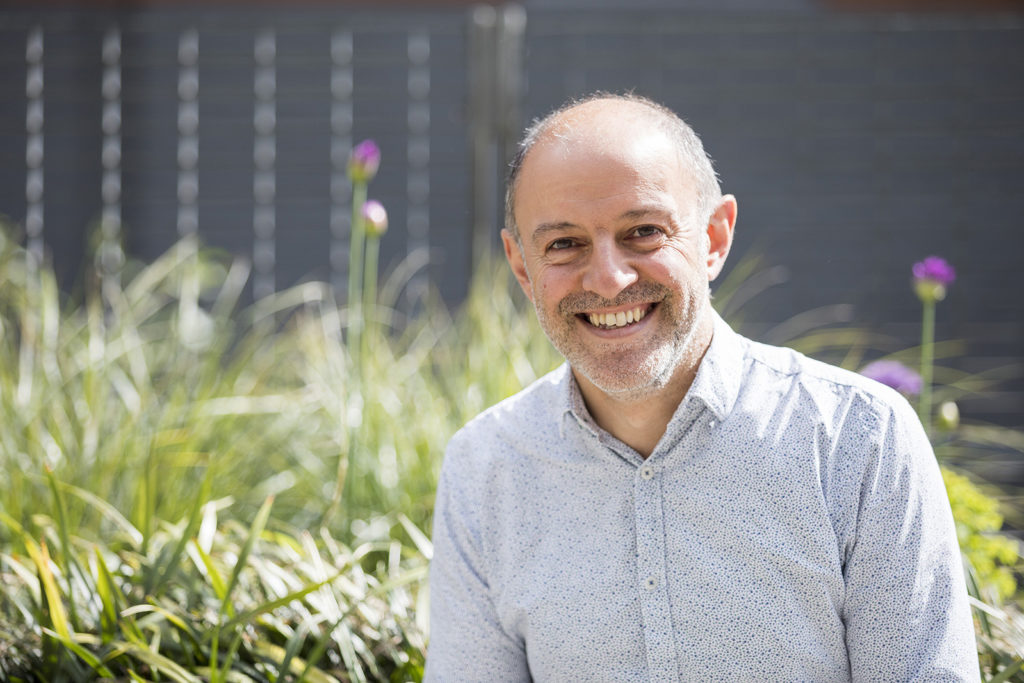
Mehron is an Urbanism and Landscape Architect Director at BDP with over 20 years’ experience of designing and implementing landscape, public realm, master-planning and urban regeneration schemes in London, Europe and internationally. He has been an active member of the Hertfordshire Design Review Panel for a number of years.
On a daily basis he is involved with designing places for people and facilitates community and stakeholder consultation events to inform emerging designs. He has assisted many local authorities and councils in compiling packages of information to attract and secure funding.
Mehron has a particular expertise in working on complex, mixed-use, multi-disciplinary projects, creating innovative external environments and landscapes which add value to developments with sustainability always a key consideration. He balances design aspirations with the need for function and has a thorough understanding of construction and detailing.
He has designed and delivered a number of award-winning schemes, including the London Planning Awards prize for Best New Public Space three times, in addition to Civic Trust and Local Government awards. Recent projects include the transformation of Beckenham Place Park, a new family facility within a large walled garden in Surrey, the new Astra Zeneca Headquarters in Cambridge and regeneration advice and design for Stevenage Town Centre.
Peter Ranken

Peter Ranken is passionate about the contribution of architecture to people’s well-being and the wider urban environment. Essential to this is thermal comfort and low energy use and he is an early adopter of the Passivhaus approach with seven years’ experience, including 26 homes and one health centre designed to this rigorous standard.
His completed projects include housing masterplans, urban regeneration, education, care and extra care projects and private houses, and he has published research on high density housing. His RIBA membership is complemented with an MSc in Environmental Design and Engineering (UCL) and certification as a Passivhaus Designer (CEPH).
Tim Riley
BA(Hons) BArch (Hons) DipPPM ARB

Tim is a registered architect and founding director of RCKa, an architectural practice that promotes socially responsive design and winner of the inaugural RIBA Emerging Practice of the Year in 2015. Areas of expertise include strategic design, rural master-planning, regeneration and specialist housing.
Masterplan and regeneration projects include; the Newham Arc of Opportunity, the precursor to the Stratford Olympic masterplan; RIBA award-winning Three Towers in Manchester and Saxton in Leeds, both with Urban Splash; Stoke City Riverside, heralded as a CABE exemplar, and the Ryde Enterprise Village made viable through social value.
Specialist housing projects include the Housing Design Award-winning Meadow Street community housing in Preston, HAPPI and HDA winning Hortsley retirement living development in Seaford and the Inside Housing Development award-winning Park House extra-care development in Harpenden. He is currently leading a team to deliver Boughton Heath in Chester which will be the first Fitwel accredited, zero carbon, retirement development in the UK.
In addition, Tim has delivered several smaller scale RIBA award-winning projects across a variety of sectors such as enterprise hubs, galleries, schools and community buildings. What unifies all these projects is a focus on identity, community cohesion, user engagement and delivering social value. This was recently recognised with the inaugural Architect of the Year Award 2020 for Social Impact.
Tim is Chair of Harrow Council’s design review panel, a member of Hounslow Council’s design review panel and a member of the Mayor of London Special Assistance Team.
Find out more about the awards here.
With 49% of the UK’s annual carbon emissions attributable to buildings, it has never been more important to ensure all buildings contribute towards a zero carbon future as soon as possible.
To facilitate and encourage this, Hertfordshire County Council are proud to host the biennial Building Futures Awards which promotes and celebrates schemes across Hertfordshire that are at the forefront of sustainable design and construction.
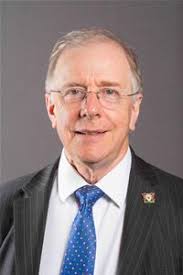
These awards provide a great platform from which to showcase exceptional buildings and placemaking work to the entire industry. As Derrick Ashley, Executive Member of Growth, Infrastructure, Planning and the Economy for Hertfordshire County Council, says: “We must ensure that buildings, both residential and commercial, are suitable for today and tomorrow’s world as best we can, and therefore the importance of Building Futures is greater than ever before.”

As Jennifer Owen, Building Futures and Landscape Manager for Hertfordshire County Council, explains: “Hertfordshire is facing unprecedented levels of growth and the development industry has a critical role to play in ensuring that building design and placemaking responds to climate change and supports sustainable communities.
“It is why we are so passionate about acknowledging and supporting exemplar design, construction and retrofit projects that utilise sustainable processes and technologies at the Building Futures Awards.
“It is a great platform to celebrate organisations and project design team’s achievements, from individual buildings through to holistic large-scale developments, and everything in between, which encompass built form and open space.”
The 2021 Building Futures Awards is open to entries from 22nd February until 14th May. Winning schemes will be announced at a prestigious awards ceremony on 21st October at Knebworth Barns.
Projects can be nominated under one or more of the four award categories: Design Excellence, Most Sustainable Construction, Retrofit for the Future and Project of the Year. Schemes must be located in Hertfordshire and completed between 28th April 2018 and 21st February 2021.
Any development is eligible for nomination, no matter how big or small, from individual buildings to large scale developments. Projects can include new build, conversion and refurbished schemes in the residential, commercial, retail, education, health and leisure sectors.
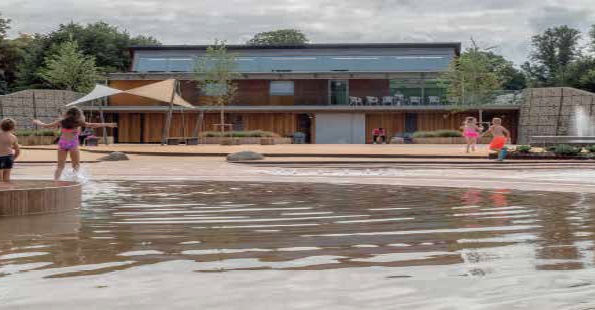
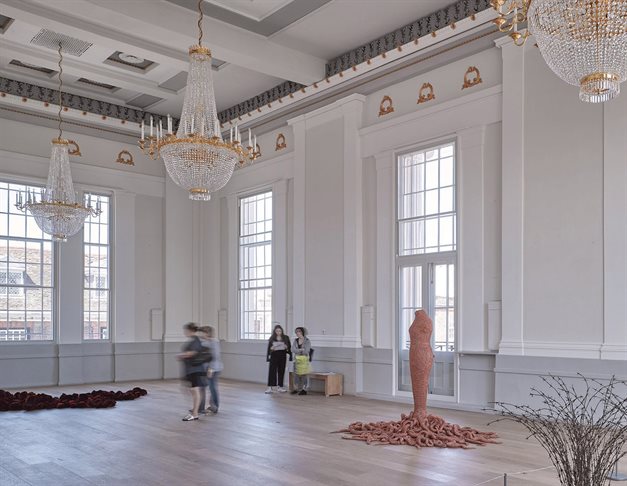
Previous winners include Cassiobury Park Hub, Watford; St. Albans Museum and Gallery, St. Albans; and Garden Avenue/Furzen Crescent, Hatfield.
If you have been involved in a project, or know of a development which you think deserves to be a winner of the 2021 Awards, please download an application pack from the Building Futures website here or email BFAwards21@hertfordshire.gov.uk.
Meet the Judges
- Design Excellence and Project of the Year
Head Judge: Jon Rowland, Jon Rowland Urban Design
Judge: Mehron Kirk, BDP - Most Sustainable Construction and Retrofit for the Future
Head Judge: Tim Riley, RCKa
Judge: Peter Ranken, Tooley Foster
Previous Building Futures Winners